Stakeholder Map

Swapped Order

REFUNDED, NEVER TRACED

Earlier this year I ordered a small hotpot on Uber Eats with contactless delivery, as I usually do. I live in an apartment building, so the courier leaves the bag outside my door and I collect it after the notification.
That evening the bag at my door held two boxed meals from someone else's order. My hotpot had gone to another household, where it seems to have been handed over in person, so they noticed straight away. My family met the courier downstairs as he was trying to sort it out, and we swapped back: we kept the boxed meals and got the hotpot.
I reported the mistake in the app and the refund was approved within minutes. The only follow up was a message confirming it. I chose this scenario because of how quickly it was closed, and how nobody asked why it happened.

WHERE THE SWAP GETS SETTLED

The map places each party by how close it sits to the rules of the delivery, from the platform that sets them to the customers who live with the result.
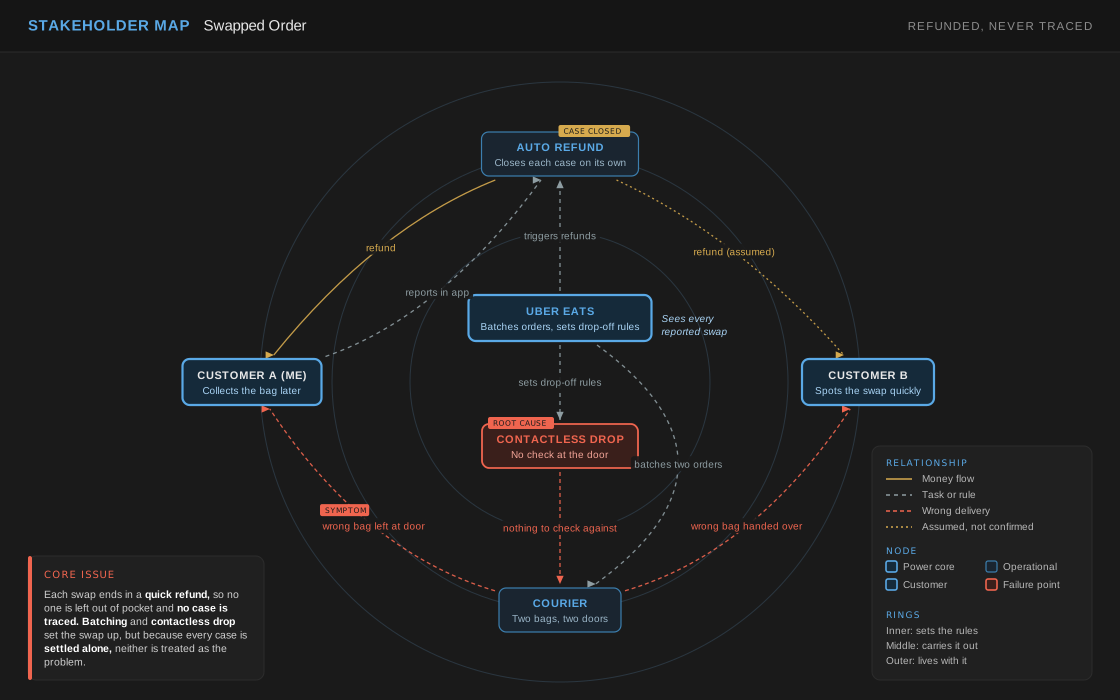
Batching puts two bags in one courier's hands. Contactless delivery removes the moment where anyone compares a bag with an order. Uber Eats presents batching as a way to keep delivery affordable, and most of the time both work as intended. The map shows what happens when they meet: the handover disappeared, and the check went with it. Both swaps were caught by people who happened to be there.

THE REFUND CLOSES THE CASE. NOTHING CLOSES THE GAP.

THE GAP

A swap like this feels rare, and the refund system treats it that way: each case is judged alone, settled in minutes and closed. As a customer I cannot see who pays for the refund or whether the swap is counted anywhere. One refund is a small, contained cost, and swaps settled one at a time never add up to a design problem.
In 2026 batching made the news in Taiwan over how couriers are paid for overlapping orders. In the coverage I read, delivery accuracy did not come up. Matching a bag label to the order on the courier's screen at the door might be enough to catch a swap before it becomes a refund.
A mistake that is always refunded is never treated as one worth fixing.